McDonald's and the Kylie Divon case: What to do when diversity is just a PR strategy?

The fast food chain McDonald's has reached an agreement in an employment dispute with a trans woman, Kylie Divon. But behind the sum of 16,500 euros and the termination of the employment relationship lies a much bigger question: what is the real future of equal treatment of trans people in the workplace?
The dispute over the changing room: discrimination or misunderstanding?
Kylie Divon, who had been working for McDonald's since 2019, was denied access to the women's changing room by a Muslim colleague in December 2023. As a trans woman who identifies as female, Divon suddenly found herself in a situation where her identity was not respected. She reported discriminatory statements that called into question her continued employment at McDonald's. Despite an escalation of the incident and several attempts to involve the company management, Divon did not feel sufficiently supported. This ultimately led to a legal dispute, which has now ended up before the Berlin Labor Court.
McDonald's: Help or PR stunt?
McDonald's tried to defuse the situation by offering "solutions". The court was told that the company was offering financial support to help Divon with her artistic activities. It also suggested donating money to LGBTQ+ organizations and producing a joint video to strengthen the company's positive image.
However, these measures were criticized by Divon as so-called "pinkwashing" - a tactic in which companies use their supposed support for LGBTQ+ rights only as a marketing tool without actually contributing to improving working conditions. The accusation: McDonald's uses the rights of minorities for its own PR without bringing about real change in everyday life.
16,500 euros: A settlement, but no real compensation
In the end, a settlement of 16,500 euros was agreed. However, this sum is not compensation in the traditional sense. Rather, it is a payment that Divon is receiving for the loss of her job, which is linked to her departure from the Group in April 2025. The payment should therefore not be seen as compensation for the incident, but as a kind of financial conclusion to a legal dispute. The settlement also means that Divon cannot assert any further claims.
Rainbow image without real change: Why PR campaigns are not enough
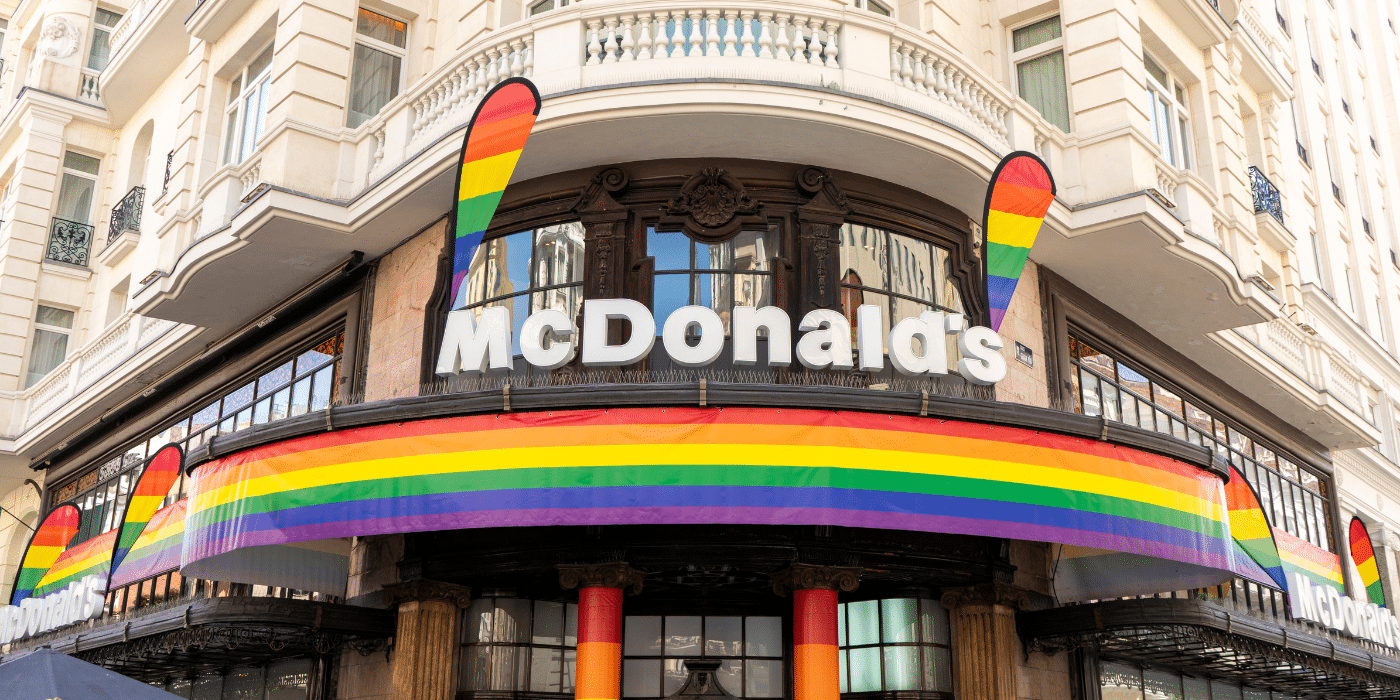
Of course, receiving financial compensation is better than nothing in many cases. But this case shows how far away many companies are from bringing about real change. McDonald's is certainly not the only company that shines with rainbow logos and supposed LGBTQ+ support but does nothing internally to actually embrace diversity. The Divon case should make us all think about what we mean by true equality and what actions companies really need to take to deliver on their diversity promises. Putting up rainbow flags is not enough if employees continue to experience discrimination on a day-to-day basis.
The company should not only commit itself to the camera and its image, but also draw real consequences from the incidents and ensure inclusion in everyday working life. Otherwise, it will just be fine words and hollow promises - and that is the real scandal.
Recht 24/7 was the only online law firm to receive the Focus Money “Highest Customer Satisfaction” seal for the fourth consecutive year Recht 24/7 2023, 2024, 2025, and 2026 . The online law firm Recht 24/7 founded in 2003 with the slogan “Law can be simple” and has since helped more than 100,000 satisfied clients with all legal matters. This is also evidenced by the “Very High Customer Trust” award from WirtschaftsWoche in October 2024.
In the areas of trademark applications and start-ups, the firm filed the most applications in Germany in 2022 and 2021:
https://dev-recht24-7.de/dpma-markenanmeldung-mit-deutschlands-nummer-eins/