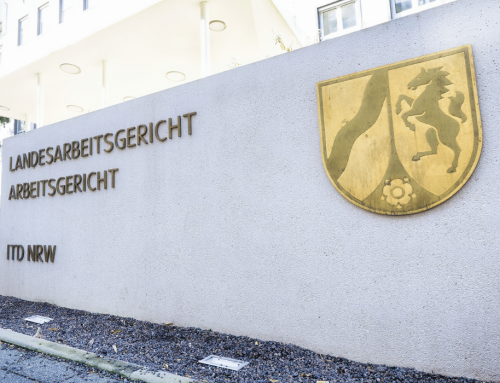
Termination Becomes a Cost Trap: New Ruling Puts Companies at Risk of Losing Millions


Image: Just Dance / Shutterstock.com
When a technicality suddenly ends up costing a fortune
A recent ruling by the Federal Labor Court is causing concern among German companies. The bottom line: terminations can end up being extremely costly—even when everything went according to plan. This is because if a dismissal is overturned in court, the employer may be required to pay the employee’s full salary retroactively—for the entire duration of the proceedings.
What sounds harmless has enormous potential for disruption. Legal proceedings often drag on for months or even years. A single mistake—such as one involving internal procedures—is enough to cause the financial burden to spiral out of control. This is precisely what makes the ruling so significant.
The End of the "Safety Clauses"
Until now, many companies have tried to protect themselves through contractual clauses. The goal was to limit or completely rule out retroactive payments. But that is no longer the case. The court has made it clear: such safeguards are no longer effective.
In practical terms, this means that employers bear the full risk. If a termination is later overturned, there is no cap on the amount. The salary must be paid in full retroactively—regardless of how long the dispute lasted.
Termination agreements on the rise
In response, many companies are now turning to a different strategy: the mutual termination agreement. Instead of a unilateral termination, the employment relationship is ended by mutual agreement. This significantly reduces the risk of a future legal dispute.
But this “peaceful solution” comes at a price. Employees suddenly hold all the cards. Nothing can happen without their consent. As a result, severance packages are on the rise. The rule of thumb that was often used in the past is losing its relevance—many companies now pay significantly more to ensure legal certainty.
The Underestimated Danger to Employees
What seems attractive at first glance can quickly turn into a trap. Anyone who signs a termination agreement risks a waiting period for unemployment benefits. You could go up to twelve weeks without benefits.
The problem: This consequence is often underestimated. A large severance package may seem tempting—but if you’re missing several months’ income at the same time, you could find yourself in a tight financial spot. That’s why it’s crucial to do the math carefully beforehand.
Taxes: The Silent Partner
There is also an important change regarding taxes. While the tax burden on severance payments can be reduced, the procedure has changed. The money is initially taxed as usual.
The tax refund comes later—through the tax return. For many people, this means having less money available right away. This can be a problem, especially during the transition period between two jobs, if you don’t have any savings.
Companies under pressure
The ruling comes at a time when the economy is already under strain. Many companies are planning layoffs, need to cut costs, and must restructure. But layoffs are now riskier than ever.
The result: restructuring becomes more expensive. Instead of clear-cut decisions, negotiations, severance packages, and individualized solutions take center stage. This costs time, money, and nerves.
More disputes are likely
In the short term, the number of lawsuits is likely to rise. Employees will test the limits of the new legal framework. At the same time, companies will need to revise their contracts and processes to avoid mistakes.
In the long term, a clear trend is emerging: job separations are becoming more complex—and significantly more costly.
While the new policy strengthens workers’ position, it goes too far in some respects. If even minor mistakes lead to existential risks, protection can quickly become a hindrance. Companies might become more cautious in hiring or postpone necessary changes. Ultimately, this risks creating a system that promises security but loses momentum—and that doesn’t help either employers or employees in the long run.
Source: ad-hoc-news.de
Recht 24/7 was the only online law firm to receive the Focus Money “Highest Customer Satisfaction” seal for the fourth consecutive year Recht 24/7 2023, 2024, 2025, and 2026 . The online law firm Recht 24/7 founded in 2003 with the slogan “Law can be simple” and has since helped more than 100,000 satisfied clients with all legal matters. This is also evidenced by the “Very High Customer Trust” award from WirtschaftsWoche in October 2024.

In the areas of trademark applications and start-ups, the firm filed the most applications in Germany in 2022 and 2021:
https://dev-recht24-7.de/dpma-markenanmeldung-mit-deutschlands-nummer-eins/
Protect yourself legally now and avoid costly termination risks. Book a consultation with our experts!