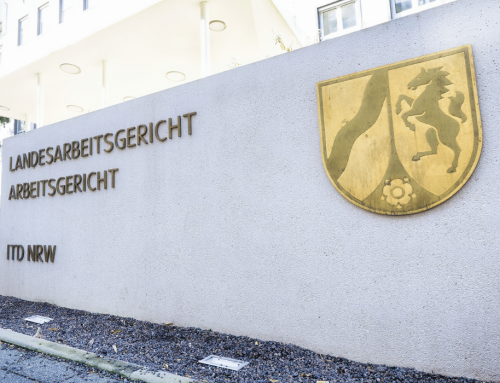
Reporting sick with a click—and suddenly losing your job? This ruling is causing a stir.


Image: Impact Photography/shutterstock.com
A few clicks on your smartphone, a short questionnaire—and your sick note is already in your email inbox. For many employees, this sounds like a convenient solution. However, a recent ruling by the Hamm Regional Labor Court shows that this very approach can be dangerous. In the worst case, it could even lead to termination without notice.
According to TECHBOOK magazine, the court upheld the dismissal of an employee who had submitted an online sick note even though he had never spoken to or seen a doctor (Ref.: 14 SLa 145/25). The decision sends a clear signal at a time when digital health services are becoming increasingly popular.
The quick online ticket – convenient, but risky
More and more online platforms are offering sick notes that can supposedly be generated in just a few minutes. The process is simple: click on symptoms, answer questions, submit the form—and shortly thereafter, the certificate arrives.
For employees, this seems like a modern alternative to visiting the doctor. No waiting room, no appointment, no time wasted. However, it is precisely this convenience that can become a problem.
This is because not every digital sick note meets the requirements expected by employers and courts. The decisive factor is not whether the note was created online, but whether a doctor was actually involved.
The specific case before the court
In the case before the Hamm Regional Labor Court, an employee had submitted a medical certificate based solely on a completed online questionnaire. There had been neither a telephone call nor a video consultation with a doctor.
Nevertheless, the document looked like a normal certificate of incapacity for work. This gave the employer the impression that a medical examination had taken place.
The court was highly critical of this approach. The judges concluded that the employee had "deliberately misrepresented" that he had undergone a medical examination.
This has severely damaged the relationship of trust between employees and employers. Companies must be able to rely on the accuracy of information provided, especially when employees report sick.
Why termination without warning was possible
Normally, problems in the employment relationship are initially followed by a warning. In this case, however, the court saw no reason for this.
The reason: the breach of trust was so serious that even a single incident was sufficient to justify termination without notice.
Employers have no way of verifying medical details. They are therefore dependent on medical certificates being issued correctly. If this impression is deliberately misrepresented, it can have serious consequences.
Digital sick notes remain permitted – but with clear limits
The ruling does not mean that online sick notes are fundamentally inadmissible. Telemedicine is now part of modern healthcare.
However, genuine contact with a doctor is crucial. This can take place via a video consultation or a telephone call, for example. Without this personal exchange, there is no medical basis for a valid sick note.
So anyone who uses digital services should check carefully how the certificate is issued.
A critical look at the development
The decision from Hamm shows one thing above all: the digital shortcut does not work everywhere. While many areas have long been organized online, personal contact with a doctor remains central when it comes to sick notes.
This seems almost like a reality check for the platform economy. Health is not an online product that can be ordered via a form. Anyone who tries to automate illness will encounter labor law problems sooner than they would like.
Source: techbook.de
Recht 24/7 was the only online law firm to receive the Focus Money “Highest Customer Satisfaction” seal for the fourth consecutive year Recht 24/7 2023, 2024, 2025, and 2026 . The online law firm Recht 24/7 founded in 2003 with the slogan “Law can be simple” and has since helped more than 100,000 satisfied clients with all legal matters. This is also evidenced by the “Very High Customer Trust” award from WirtschaftsWoche in October 2024.
In the areas of trademark applications and start-ups, the firm filed the most applications in Germany in 2022 and 2021:
https://dev-recht24-7.de/dpma-markenanmeldung-mit-deutschlands-nummer-eins/
Secure your rights when it comes to digital sick notes. Book a consultation now and avoid legal pitfalls!