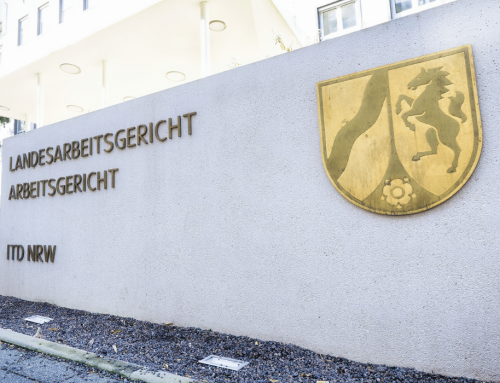
ECJ puts the brakes on church employers: Leaving the church is not grounds for termination


The case from Wiesbaden shows how quickly a personal decision can escalate into a major dispute over principle. A social worker had been employed by a church-affiliated organization for many years. Then she left the Catholic Church. Shortly thereafter, she lost her job. Now the European Court of Justice has established an important precedent: Leaving the church alone should not automatically lead to dismissal.
This gives the dispute far greater significance than just this individual case. After all, many people in Germany work in social services, hospitals, counseling centers, or care facilities run by churches. For them, the central question is how far a church-affiliated employer is allowed to interfere in personal life decisions.
Not every church employment relationship is the same
The judges in Luxembourg have made it clear that not every religious argument is automatically sufficient. What matters, rather, is the specific work that a person performs. It therefore depends on whether membership in a particular church is actually a genuine prerequisite for that job.
It is precisely this point that raises serious doubts in this case. The woman worked in counseling, a field in which professional competence, trust, and experience in day-to-day practice likely carry more weight than formal membership in a religious denomination. Furthermore, the fact that other employees with similar responsibilities were apparently not Catholic also argues against taking a hard line.
That is the crux of the matter: someone who does the same work should not be treated differently simply because they have left the Church, while others were hired from the start without being Catholic members.
Luxembourg looks at reality, not just church rules
The church views resignation as a deliberate break. It argues that someone who actively resigns sends a different signal than someone who was never a member. This view is understandable from the church’s perspective. However, that does not automatically mean that, under labor law, resignation must always result in termination.
The ECJ takes a clear counter-stance on this issue. It places greater emphasis on the practical significance for the workplace. Is religious identity truly necessary for the specific job? Or is it merely used as a pretext, even though the work can be performed without it without any problems? This distinction is likely to become even more important in the future.
A ruling with implications beyond the individual case
The case has not yet been finally decided. The Federal Labor Court must now further examine the specific dispute and apply the guidelines from Luxembourg. Nevertheless, one thing is already clear: the hurdles for termination following withdrawal from the church are higher than some church-affiliated employers would have liked.
This is a particularly sensitive issue in the social sector. Many people work in this field not because of their religious beliefs, but because they want to help others, support them, and take on responsibility. The idea that their employment could hinge on a formal religious requirement has long seemed outdated.
And that is precisely where the real problem lies: those who preach charity should not start by checking their employees’ baptismal records. A church that seeks to cast out good people simply because they have left the faith risks, in the end, one thing above all else—that it will appear morally smaller than its own claims.
Source: hessenschau.de
Recht 24/7 was the only online law firm to receive the Focus Money “Highest Customer Satisfaction” seal for the fourth consecutive year Recht 24/7 2023, 2024, 2025, and 2026 . The online law firm Recht 24/7 founded in 2003 with the slogan “Law can be simple” and has since helped more than 100,000 satisfied clients with all legal matters. This is also evidenced by the “Very High Customer Trust” award from WirtschaftsWoche in October 2024.
In the areas of trademark applications and start-ups, the firm filed the most applications in Germany in 2022 and 2021:
https://dev-recht24-7.de/dpma-markenanmeldung-mit-deutschlands-nummer-eins/
Have you been laid off or are you unsure about your rights? Book a consultation now and secure your position under labor law!