Parking trap in court: ruling stops high fines


Image: Hadrian / Shutterstock.com
Many drivers are familiar with the problem: you park briefly in a private parking lot—later, a payment request arrives in the mail. Often, it's not just about the actual parking fee. Instead, operators suddenly demand up to 50 euros in contractual penalties.
According to Focus, a recent ruling by the Bamberg Higher Regional Court now sets limits on such claims. The court clarified that certain penalty clauses in the general terms and conditions (GTC) of parking lot operators may be inadmissible.
When parking suddenly becomes expensive
Private parking spaces in front of supermarkets or shopping centers often operate according to a simple principle: parking is initially free or inexpensive—but only under certain conditions.
For example, anyone who forgets to register, pays late, or violates the parking rules will later receive a letter from the operator. In addition to the parking fee, this letter often includes a flat-rate contractual penalty.
Such claims can quickly become expensive. According to consumer protection agencies, amounts of up to 50 euros are not uncommon.
Consumer advocates refer to it as a business model
Critics see these demands as part of a calculated system. Parking spaces are offered at attractive rates or free of charge, while the actual revenue is generated through contractual penalties.
This is precisely why the Bremen Consumer Advice Center took legal action against the parking lot operator Wemolo GmbH. The focus was on the company's terms and conditions.
Consumer protection advocates considered the flat-rate penalty fees to be legally problematic and took legal action against the relevant clauses.
Court declares contractual penalties invalid
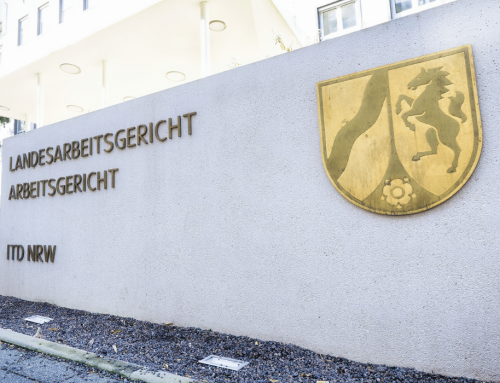
The Bamberg Higher Regional Court ultimately ruled in favor of the consumer center (Ref. 3 UKl 21/25 e).
In the court's opinion, lump-sum contractual penalties in general terms and conditions are not permissible in this case. Such provisions violate the provisions of the Civil Code and are therefore also invalid.
The result: operators cannot simply invoke such clauses to enforce high payment claims against drivers.
The ruling could have implications for numerous similar models, as comparable contract terms are used in many private parking lots.
What drivers can do now
For those affected, the decision means one thing above all else: payment requests should be checked carefully.
If you receive a bill for alleged parking violations, you do not have to accept it automatically. In certain cases, it may be advisable to dispute the claim—especially if it is based on flat-rate contractual penalties.
According to the consumer protection agency, the ruling significantly strengthens the position of drivers.
Critical commentary
The ruling from Bamberg highlights a fundamental problem in the everyday lives of many consumers. Parking spaces are monitored digitally, license plates are automatically recorded, and invoices are sent by mail later. This is a lucrative system for operators—but often an expensive surprise for drivers. It is therefore long overdue for courts to take a closer look at this issue. Otherwise, a quick shopping trip can quickly turn into a business model at the expense of drivers.
Source: focus.de
Recht 24/7 was the only online law firm to receive the Focus Money “Highest Customer Satisfaction” seal for the fourth consecutive year Recht 24/7 2023, 2024, 2025, and 2026 . The online law firm Recht 24/7 founded in 2003 with the slogan “Law can be simple” and has since helped more than 100,000 satisfied clients with all legal matters. This is also evidenced by the “Very High Customer Trust” award from WirtschaftsWoche in October 2024.
In the areas of trademark applications and start-ups, the firm filed the most applications in Germany in 2022 and 2021:
https://dev-recht24-7.de/dpma-markenanmeldung-mit-deutschlands-nummer-eins/
Avoid high fines from parking traps! Book your legal consultation now and secure legal protection.