Speed under control: Why section control is fairer - but is still hardly used in Germany

What is section control - and why do many drivers prefer it?
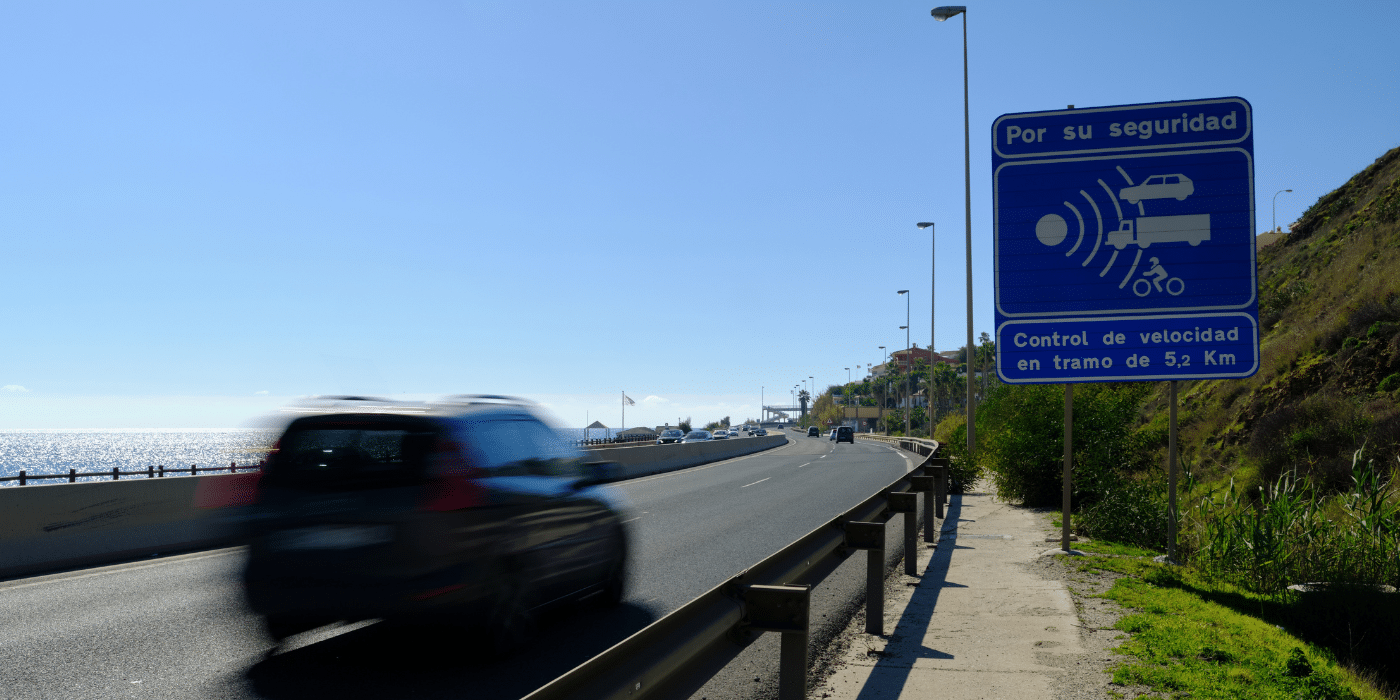
Section control - also known as section radar - is an intelligent measuring system that does not "flash" at specific points, but measures the average speed of a vehicle over a longer section. Two cameras record how long a vehicle has taken at the beginning and end of a certain stretch of road - and use this to calculate the average speed.
The advantage: if you stick to the speed limit overall, you are on the safe side - even if you were a little too fast or too slow in between. This leads to a smoother flow of traffic, less abrupt braking in front of speed cameras and - as studies show - fewer accidents. In countries such as Austria, the Netherlands, Great Britain and Switzerland, this technology has long been standard.
Why doesn't section control work in Germany?
In Germany, the experiment with section control has been bumpy so far. A pilot project on the B6 near Hanover was launched in 2018, officially went into regular operation in 2021 - and was switched off again at the beginning of 2024. The reason: data protection issues.
Although even the Federal Administrative Court judged the system to be permissible, the legal requirements for data storage and encryption changed at the beginning of 2024. The technology used could no longer meet these requirements and the manufacturer did not want to finance a retrofit. The project was therefore history - and further planned systems were put on hold.
Ironically, the data of drivers driving correctly was deleted immediately - yet the technical implementation was no longer sufficient according to the legislator. It was not the idea, but the implementation that caused Section Control to fail in Germany.
Does the technology work - and what are its real benefits?
The successes speak for themselves:
- In Lower Saxony, the average speed fell from 105 to 95 km/h after the introduction of section control.
- The number of speeding offenders on the 2.2 km section was only 3.6 per day.
- Not a single accident was recorded during the project period.
Austria also reports: There, the number of road deaths fell by up to 50 percent on controlled sections. In the Netherlands, the number of accidents fell by almost half following the introduction of the system. The technology works - especially in sensitive areas such as tunnels or roadworks.
But it is expensive. A permanently installed section control system costs up to one million euros, with mobile versions costing a further 300,000 to 400,000 euros. A classic speed camera is significantly cheaper.
Section control: speed limit with a claim to fairness
Unlike classic speed cameras, it does not penalize the moment of a second, but the actual driving behavior over a distance. This makes sense from a road safety perspective - and is fairer from a legal point of view. This is because it really only affects those who are constantly speeding - and not those who were briefly distracted or accelerated slightly downhill.
What is lacking in this country is not the concept - but the political courage and the will to implement it in line with data protection regulations. At a time when we live with facial recognition, traffic apps and smartwatch data everywhere, the data protection argument seems like a pretended fig leaf.
Conclusion: Section control has the potential to make our roads safer - if we let it. Germany is once again slowing itself down.
Recht 24/7 was the only online law firm to receive the Focus Money “Highest Customer Satisfaction” seal for the fourth consecutive year Recht 24/7 2023, 2024, 2025, and 2026 . The online law firm Recht 24/7 founded in 2003 with the slogan “Law can be simple” and has since helped more than 100,000 satisfied clients with all legal matters. This is also evidenced by the “Very High Customer Trust” award from WirtschaftsWoche in October 2024.
In the areas of trademark applications and start-ups, the firm filed the most applications in Germany in 2022 and 2021:
https://dev-recht24-7.de/dpma-markenanmeldung-mit-deutschlands-nummer-eins/
Get comprehensive advice on section control and find out how you can avoid fines. Get your legal advice today!