Part-time sick leave: a model with potential - or a trap?
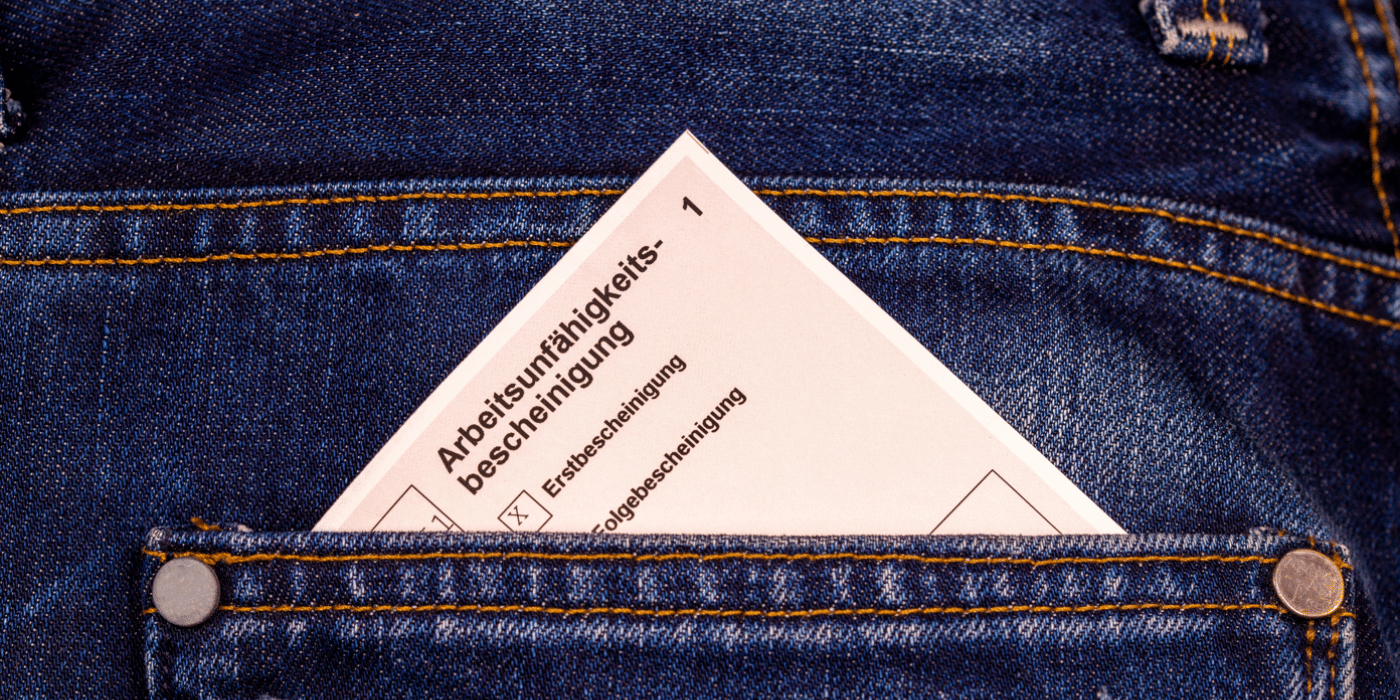

More and more people are working from home and taking advantage of flexible working hours. The new proposal for part-time sick leave fits in with this trend - an idea that is causing debate at home and abroad. But who could actually benefit from this model and what are the potential pitfalls?
What is part-time sick leave?
The President of the German Medical Association, Klaus Reinhardt, has put forward an idea: in future, people who are only slightly ill could work for a few hours a day and use the rest of the time to recover. This could be easier to implement, especially thanks to digital working options. The approach: employees with mild infections could work from home to a reduced extent without infecting colleagues. Reinhardt sees this as a way of reconciling work and health.
Opportunities and risks of part-time sick leave
Advantages: Relief and productivity
One advantage of this model is the flexibility it offers employees. Particularly in professions where work piles up quickly, part-time sick leave could prevent the to-do list from becoming immeasurably longer. This would make returning to the office after recovery more relaxed, without the feeling of drowning in work. The German economy could also benefit: Experts estimate that a ten percent reduction in full sick days alone through part-time work would lead to around 45 million additional working days per year - a productivity gain of around five billion euros.
Disadvantages: Pressure and health risks
However, not everyone sees this development in a positive light. The German Trade Union Confederation criticizes the fact that such a model could put employees under pressure. The risk: bosses could pressure employees to work even if they have serious complaints. Board member Anja Piel warns that such practices carry the risk of delaying the illness and putting health and earning capacity at risk in the long term. Many people are already going to work sick or working from home - a trend that could continue to increase.
International experience: A look at Sweden
Sweden has already had positive experiences with part-time sick leave. Doctors there can decide whether someone is 25, 50 or 75 percent fit for work. The model has proved successful: Around a third of those on sick leave make use of this option, which has reduced both the number of days of incapacity for work and the cost of sick pay. However, there are differences: In Sweden, employees only receive around 80 percent of their salary as sick pay for two weeks, whereas in Germany, full salary is paid for six weeks. The financial pressure to return to work quickly is therefore higher in Sweden.
Part-time sick leave - a sensible solution?
It remains to be seen whether the part-time sick leave model will catch on in Germany. Experience from Scandinavia shows that it can work if it is implemented with a sense of proportion and with consideration for the health protection of employees. The benefits would be enormous, but the risks should not be underestimated. One thing is clear: a regulation is needed that is flexible enough to meet the needs of employees while at the same time preventing the pressure on employees' health from increasing.nullIn the end, it could depend on how companies and employees accept the model and whether the legislator creates a framework that prevents abuse. Only then could part-time sick leave become a real step forward for the labor market and the health of employees.
Recht 24/7 was the only online law firm to receive the Focus Money “Highest Customer Satisfaction” seal for the fourth consecutive year Recht 24/7 2023, 2024, 2025, and 2026 . The online law firm Recht 24/7 founded in 2003 with the slogan “Law can be simple” and has since helped more than 100,000 satisfied clients with all legal matters. This is also evidenced by the “Very High Customer Trust” award from WirtschaftsWoche in October 2024.null
In the areas of trademark applications and start-ups, the firm filed the most applications in Germany in 2022 and 2021:
https://dev-recht24-7.de/dpma-markenanmeldung-mit-deutschlands-nummer-eins/