A parking trap at the supermarket? Why you might suddenly have to pay 50 euros


The shopping trip usually only takes ten minutes. You pop in quickly to get some milk, maybe stop by the pharmacy next door. But a few days later, you suddenly find a letter in your mailbox: a fine of 30, 40, or even 50 euros for “illegal parking” in a supermarket parking lot.
Many drivers are shocked. That’s because they often don’t even realize they’ve allegedly broken the rules. This is precisely what’s currently the subject of heated debate—especially following a case in Bavaria that has now caught the attention of many consumers.
More and more private companies are monitoring parking lots at supermarkets and discount stores. Criticism of this practice is growing rapidly. Even the ADAC is now sounding the alarm and warning people not to pay these fines too hastily.
The new reality of parking: Free parking is a thing of the past
In the past, many supermarket parking lots were simply convenient. Park for free, do your shopping, and you’re done. But those days are changing rapidly.
More and more cities are contracting private companies to monitor their parking lots. These companies track parking durations, check license plates, and send bills to drivers who have allegedly violated the rules.
The problem: Many customers don't even notice the new rules.
Sometimes the sign is hung too high. Sometimes the text is tiny. Sometimes signs are hidden behind trees or at driveways, making them easy to miss in the hustle and bustle of everyday life.
That is exactly what is causing a stir right now in Aschheim, near Munich. A large parking lot there was suddenly equipped with new signs. Shortly thereafter, many drivers received bills.
Many of those affected feel as though they have been lured into a trap.
Why high claims suddenly arise
It becomes particularly frustrating when several expenses add up.
Anyone who forgets to display a parking disc or exceeds the permitted parking time is often initially hit with a fine. If the fine isn't paid right away, reminders, collection letters, or additional fees will follow.
As a result, an initial 30 euros can quickly turn into a much larger amount.
The ADAC has long criticized the fact that the rules in this area are often unclear to consumers. There are fewhttps://admin.javajazzfestival.com/ clear legal guidelines. As a result, many cases fall into a gray area that is difficult for ordinary drivers to navigate.
What’s more, many people automatically think of an official parking ticket issued by the city or the police. In reality, however, supermarket parking lots are usually private property.
And that's exactly where different rules apply.
The Big Misconception: Not Every Claim Is Automatically Valid
The ADAC therefore strongly recommends that you do not pay without checking.
After all, not every claim is automatically valid or legally sound. The key factor is whether drivers were even able to clearly understand which terms and conditions applied.
Some important questions to consider are:
- Was the signage clearly visible?
- Were the rules explained clearly?
- Was the parking duration properly documented?
- Is the amount of the claim reasonable?
- Is this really a legitimate claim, or is it just the debt collection agency trying to put extra pressure on me?
Older people, in particular, or customers who just wanted to make a quick purchase, often feel caught off guard.
Many people say that it was only through the letter that they found out there were time limits in the parking lot at all.
Modern surveillance instead of a friendly reminder
Consumer advocates view this technological development with particular concern.
This is because many parking lots are now monitored by camera systems. These systems automatically capture license plate numbers and record entry and exit times.
That seems efficient—but it can quickly become impersonal and ruthless.
In the past, you might have found a ticket tucked behind the windshield. Today, a payment notice arrives directly in the mail.
For many customers, this creates an uneasy feeling: You just pop in for a quick errand—and suddenly find yourself caught up in a system of surveillance, deadlines, and fees.
What drivers need to keep in mind right now
If you receive a demand letter, you should remain calm and carefully review the documents.
Important note:
- Take photos of the signage.
- Track parking times.
- Don't be too quick to admit guilt.
- And above all: Don't pay right away out of fear.
Because sometimes it really is worth taking a closer look.
At the same time, however, it is also true that anyone who clearly and visibly violates clearly identifiable rules must generally expect to have to pay.
The truth lies—as is so often the case—somewhere in between.
Customer parking lot or modern payment machine?
Many supermarket parking lots now seem less like a customer service and more like a business model based on parking tickets.
Of course, rules are necessary. No one wants long-term parkers blocking customer spots. But when signs look like hidden GTC and drivers don’t realize until days later that they’ve supposedly entered into a “contract,” something is going wrong.
The real problem is this: Many companies are now profitinghttps://hssbv.org/ from customer confusion.
And that is exactly where lawmakers should finally step in. Clear rules. Clear signs. Clear limits on fees.
After all, someone who just wanted to quickly pick up some bread shouldn't feel like they've been ripped off by the parking fees.
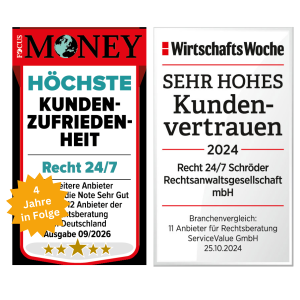
Recht 24/7 was the only online law firm to receive the Focus Money “Highest Customer Satisfaction” seal for the fourth consecutive year Recht 24/7 2023, 2024, 2025, and 2026 . The online law firm Recht 24/7 founded in 2003 with the slogan “Law can be simple” and has since helped more than 100,000 satisfied clients with all legal matters. This is also evidenced by the “Very High Customer Trust” award from WirtschaftsWoche in October 2024.
In the areas of trademark applications and start-ups, the firm filed the most applications in Germany in 2022 and 2021:
https://dev-recht24-7.de/dpma-markenanmeldung-mit-deutschlands-nummer-eins/
Avoid unnecessary parking tickets at the supermarket! Get advice from our experts and protect yourself from unexpected fines.