War or peace? Streetcar drivers refuse to work because of Bundeswehr advertising - What's behind it?
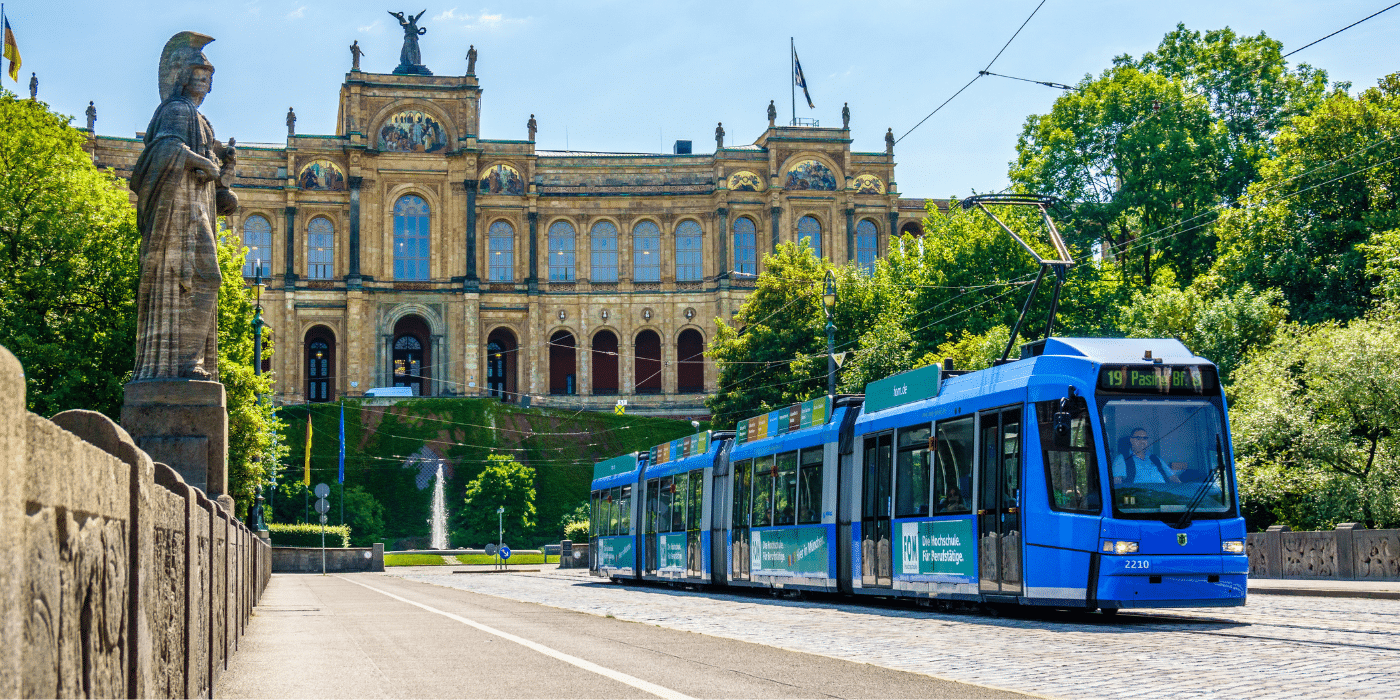

The Munich Transport Company (MVG) is currently in the spotlight after three streetcar drivers refused to drive vehicles with Bundeswehr advertising. The reason: they see this advertising as a kind of "war mission" and are appealing to their conscience. But what happens when personal conscience overlaps with professional duties? We take a look at the legal background and the possible reaction of employers.
A conflict of conscience on wheels
The streetcars that triggered the controversy are no longer the classic, colorful passenger buses. They bear the camouflage pattern of the German armed forces, complemented by the distinctive Iron Cross - a sight that provokes opposition from streetcar drivers Michael Niebler and his colleagues. For them, it is not simply an advertisement on a vehicle. Rather, they see the streetcar as a symbol of the army - and thus as something associated with war and violence.
Niebler, one of the drivers concerned, explained: "I don't want to advertise for an organization that is ultimately concerned with killing people." For him, driving such a streetcar is a conflict of conscience that he cannot simply ignore. Together with his colleagues, he submitted a formal refusal to MVG to drive such vehicles.
The legal basis - What does the Basic Law say?
The legal basis for the streetcar drivers' resistance is the German Basic Law. More precisely, Article 4 protects citizens' freedom of conscience. No one may be forced to serve in the armed forces - not even indirectly. But is this interpretation by the streetcar drivers really a conscientious objection or is it simply a personal aversion to advertising?
MVG has already stated that it takes the concerns of the drivers seriously, but basically cannot make any exceptions to the allocation of vehicles. The Bundeswehr's advertising is not political advertising, but ordinary corporate advertising - and this is where the dilemma begins.
What happens now? - The way to the labor court?
The MVG works council is currently examining how to proceed. If the situation escalates, the case could go to a labor court. This raises the question: does the employer have the right to force the drivers to continue driving streetcars with Bundeswehr advertising? And how far can an employee's personal conflict of conscience go in such a case?
Legal expert Professor Robert Holzapfel from Munich University of Applied Sciences believes that the streetcar drivers' conflict of conscience will probably not be enough to justify their refusal in court. After all, in the perception of many people today, the Bundeswehr is a peacekeeping army that is only involved in peacekeeping missions.
Freedom of conscience in the workplace: where does the right to dissent end?
The question is whether we as a society are prepared to actually value freedom of conscience in the world of work as highly as the Basic Law stipulates. The example of the streetcar drivers shows how narrow the boundaries between professional duties and personal convictions can be. Even if the Bundeswehr is no longer perceived as a "warmonger" as it was in previous centuries, the question remains: what if someone actually disagrees with certain aspects of their profession on another level? How much freedom can we allow here without jeopardizing the work process?
Our position: The Basic Law protects the conscience - but the reality of the working world often places greater demands on the willingness to compromise.
Recht 24/7 was the only online law firm to receive the Focus Money “Highest Customer Satisfaction” seal for the fourth consecutive year Recht 24/7 2023, 2024, 2025, and 2026 . The online law firm Recht 24/7 founded in 2003 with the slogan “Law can be simple” and has since helped more than 100,000 satisfied clients with all legal matters. This is also evidenced by the “Very High Customer Trust” award from WirtschaftsWoche in October 2024.
In the areas of trademark applications and start-ups, the firm filed the most applications in Germany in 2022 and 2021:
https://dev-recht24-7.de/dpma-markenanmeldung-mit-deutschlands-nummer-eins/