Climate activism in court: "Last Generation" charged with criminal association
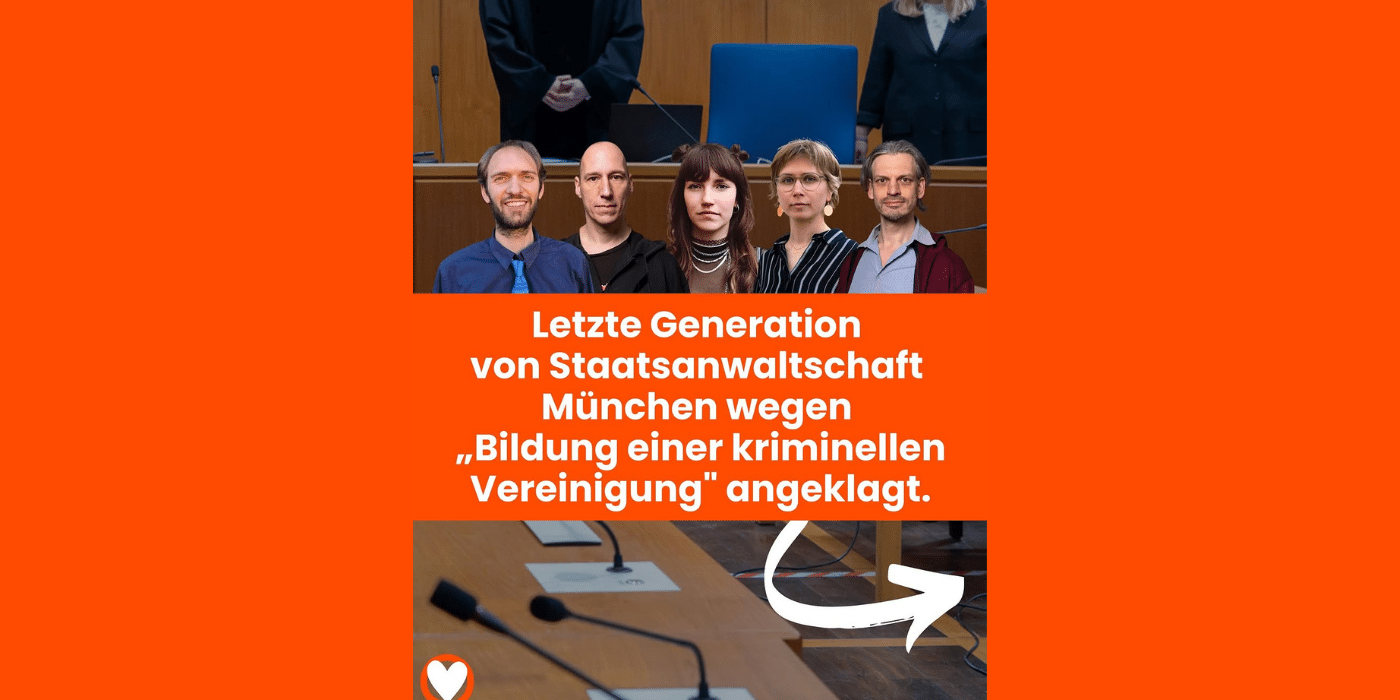

Image source: Instagram @lastgeneration
From protest to indictment: the "Last Generation" now faces harsh punishment
Blocked streets, taped hands and endless discussions - the "Last Generation" has polarized more than almost any other protest movement in recent years. Now the legal situation is coming to a head: five former members of the group have been charged by the Munich public prosecutor's office on suspicion of forming a criminal organization.
Among them is said to be Carla Hinrichs, one of the best-known faces of the movement. What does that mean in concrete terms? In the worst case, several years in prison. But the case is legally and politically sensitive - because it is not just about street blockades, but also about the limits of civil disobedience in a democracy.
149 pages of indictment - and many unanswered questions
According to the group, the indictment comprises 149 pages. The specific contents remain secret, partly because the defendants have not yet officially received all the documents. One thing is certain: Section 129 of the German Criminal Code - forming a criminal organization - is not a trivial offence. Anyone convicted faces up to five years in prison, and even up to ten years in particularly serious cases.
However, the prerequisite for a conviction is that the organization was specifically aimed at committing crimes - and that these crimes were not just a "side issue", but the core of the activity. This is precisely what is disputed. While critics of the "Last Generation" speak of coercion and endangering traffic, the activists emphasize their claim to civil protest and education on the climate crisis.
The state cracks down - and reaps criticism
The indictment is part of a broad wave of investigations that culminated in a nationwide raid in 2023: 170 police officers searched 15 properties in seven federal states. Even the group's website was temporarily shut down - it suddenly stated that the "Last Generation" was a criminal organization. The accusation was clear - the public impact enormous. The website was unblocked shortly afterwards, but the damage was done.
Climate activism or criminal structure?
For many observers, the question now arises: where does legitimate protest end - and where does a criminal offense begin? The group continues to see itself as a political movement. The outcome of the trial could send a signal. If the court comes to the conclusion that the "Last Generation" was a criminal organization, this could have harsh consequences for comparable forms of protest. Conversely, an acquittal could significantly secure the space for civil disobedience in Germany.
A process that deals with more than just a section of the law
It has not yet been decided whether a trial will actually take place. The presumption of innocence applies - even for climate activists. But the case already shows how much the way protest is dealt with in Germany has changed. The state is taking tougher action, public debate is becoming more emotional - and the constitutional state is faced with the task of striking a new balance between freedom, the right to protest and order.
Recht 24/7 was the only online law firm to receive the Focus Money “Highest Customer Satisfaction” seal for the fourth consecutive year Recht 24/7 2023, 2024, 2025, and 2026 . The online law firm Recht 24/7 founded in 2003 with the slogan “Law can be simple” and has since helped more than 100,000 satisfied clients with all legal matters. This is also evidenced by the “Very High Customer Trust” award from WirtschaftsWoche in October 2024.

In the areas of trademark applications and start-ups, the firm filed the most applications in Germany in 2022 and 2021:
https://dev-recht24-7.de/dpma-markenanmeldung-mit-deutschlands-nummer-eins/