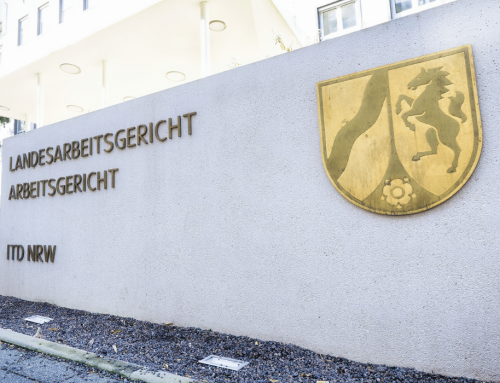
No Access to the Constitutional Court: Student's Lawsuit Seeking Transparency Fails


Image: Chris Redan/Shutterstock.com
A law student seeks access to information—and hits a clear wall. In the Administrative Court of Karlsruhe, he sought to compel the Federal Constitutional Court to release information. But his attempt was unsuccessful. The ruling shows that even when it comes to transparency, special rules apply to the highest court.
What the case was about
According to an article by Legal Tribune Online, the catalyst was a meeting between the Federal Constitutional Court and judges of the European Court of Human Rights. This exchange in 2023 focused, among other things, on legal developments—and, in fact, on access to information.
A presentation played a central role in this. It was precisely this manuscript that the plaintiff wanted to see. With the support of the “FragDenStaat” platform, he invoked the Freedom of Information Act. His goal: to gain greater insight into the court’s work.
But Karlsruhe rejected the proposal—and stood by its decision in court as well.
Court draws a clear line
The Administrative Court of Karlsruhe dismissed the lawsuit. It is therefore clear that, in this case, the Federal Constitutional Court is not required to provide any information.
The crux of the dispute lay in a fundamental question: Are such technical discussions considered administrative matters—or judicial activities? After all, claims for information apply only in the administrative sphere.
The Constitutional Court argued that such meetings are part of its core mission. The purpose of these exchanges is to discuss legal developments and avoid conflicts between courts. This requires a protected framework.
Confidentiality over transparency
Another key point was confidentiality. In the court’s view, open communication only works if not every word is later made public.
The concern is that if details were to leak out, judges might hold back during such discussions. That would undermine the purpose of the meetings.
The other side saw it differently. They argued that at least a prepared presentation did not have to remain confidential. After all, they said, this was not about spontaneous discussions, but about structured content.
But this view did not gain acceptance.
Many unanswered questions—but no success
The proceedings also focused on details: Is a manuscript merely a draft? Does archiving it make it an official document? And how long can something remain classified?
The court asked numerous questions, but in the end, the lawsuit was dismissed. An appeal was not allowed.
The written reasoning has not yet been issued. It is likely to reveal exactly how the court draws the line between transparency and confidentiality.
Why the ruling is controversial
At first glance, the case seems unusual, but it has broader implications. The issue at stake is how transparent government institutions must be—especially when they wield significant power.
The fact that the Federal Constitutional Court, of all institutions, is insisting on secrecy in this matter is sparking debate. After all, it is often the very institution that safeguards fundamental rights such as freedom of information.
At the same time, the decision highlights a dilemma: without safe spaces, honest dialogue becomes difficult. However, too much isolation erodes trust.
That is precisely where the real tension lies. People are quick to demand transparency—but it isn’t always practiced. And when even a court, which is supposed to serve as a check on power, evades scrutiny, it leaves a bad taste in one’s mouth.
Sources: lto.de
Recht 24/7 was the only online law firm to receive the Focus Money “Highest Customer Satisfaction” seal for the fourth consecutive year Recht 24/7 2023, 2024, 2025, and 2026 . The online law firm Recht 24/7 founded in 2003 with the slogan “Law can be simple” and has since helped more than 100,000 satisfied clients with all legal matters. This is also evidenced by the “Very High Customer Trust” award from WirtschaftsWoche in October 2024.
In the areas of trademark applications and start-ups, the firm filed the most applications in Germany in 2022 and 2021:
https://dev-recht24-7.de/dpma-markenanmeldung-mit-deutschlands-nummer-eins/
Want to better understand your rights? Book a consultation now and find out how you can demand transparency!