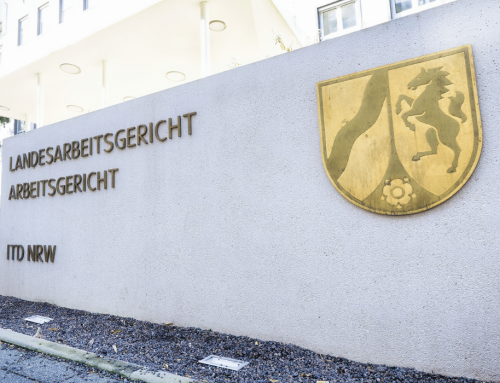
Philip Morris "information campaign" about the dangers of smoking in court in Munich!


The Free State of Bavaria has prohibited the tobacco company Philip Morris from running an information campaign about the dangers of cigarette smoking, in which Philip Morris had advertised e-cigarettes, which are also harmful to health, as a healthy alternative to conventional smoking. Philip Morris took legal action against this ban and the case was heard today at the Administrative Court in Munich. The judges emphasized that the law also prohibits indirect advertising for tobacco products. The verdict is expected tomorrow.
The dispute: Education or advertising?
The company drew attention to the numerous carcinogenic substances in cigarette smoke and recommended giving up tobacco products as the best alternative. At the same time, however, Philip Morris also advertised so-called tobacco heaters such as the "IQOS", which are said to be less harmful. For the Bavarian government, this was clearly a form of tobacco advertising, which is prohibited. The question that is now being heard in court: Is the campaign permissible education or disguised advertising for alternative products?
The Philip Morris lawsuit: a legal tightrope act
Philip Morris resisted the ban and took the matter to court. Their argument: the campaign was not advertising, but an honest attempt to educate the public about the dangers of smoking and present healthier alternatives. However, the administrative court in Munich was skeptical. The judges made it clear that this type of (indirect) tobacco advertising is prohibited. Even the reference to less harmful products could pass as clever marketing and thus violate the laws on tobacco advertising.
For the company, this means a serious court ruling that goes far beyond the individual case. It is not just about this campaign, but about the fundamental question: where does the duty to inform end and where does advertising begin?
What does the court say? A judgment with far-reaching consequences
The verdict of the Munich Administrative Court is expected tomorrow and it will have to draw a clear line between permitted information and unauthorized advertising. If the judges confirm the ban on the campaign, this could have far-reaching consequences for the entire tobacco industry. Companies would have to fundamentally rethink their communication strategies and would no longer be allowed to present their products as less harmful. Consumers would then only be left with one piece of information: smoking is dangerous and the best alternatives are to avoid tobacco products altogether.
What the experts say
Prof. Dr. Jürgen Behr, Director of the Medical Clinic and Polyclinic V of the LMU Clinic, says: "Vaping can also be harmful to health because fine dust and tiny droplets penetrate the lungs and damage them. The long-term effects have not yet been investigated in humans, but studies on animals show that the effects of vaping are similar to those of traditional tobacco consumption. These include lung cancer, COPD, which causes sputum production and shortness of breath, and a worsening of asthma. In response to Philipp Morris' claim that vaping makes it easier to quit, Behr replies: "Whether you drink whiskey or cognac, it's the same thing."
Conclusion
The question of whether Philip Morris was actually "advertising" here is not as clear-cut as it seems. Of course, the company is primarily concerned with business - but is this really illegal if it is also pointing out the dangers of smoking and offering alternatives? The legislation in this area is complicated and leaves little room for interpretation. But the court's decision could shake up the whole system. What will happen to freedom of information? And who decides how far companies are allowed to go to inform their customers? We at Recht 24/7 are curious to see how the judges will assess this balancing act between information and advertising. But one thing is certain: it won't be the last time that such questions end up in court.
Recht 24/7 was the only online law firm to receive the Focus Money “Highest Customer Satisfaction” seal for the fourth consecutive year Recht 24/7 2023, 2024, 2025, and 2026 . The online law firm Recht 24/7 founded in 2003 with the slogan “Law can be simple” and has since helped more than 100,000 satisfied clients with all legal matters. This is also evidenced by the “Very High Customer Trust” award from WirtschaftsWoche in October 2024.
In the areas of trademark applications and start-ups, the firm filed the most applications in Germany in 2022 and 2021:
https://dev-recht24-7.de/dpma-markenanmeldung-mit-deutschlands-nummer-eins/