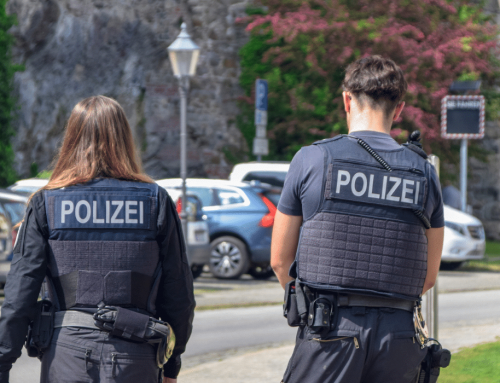
Border controls in Germany: A court sets clear limits - unlawfulness recognized!
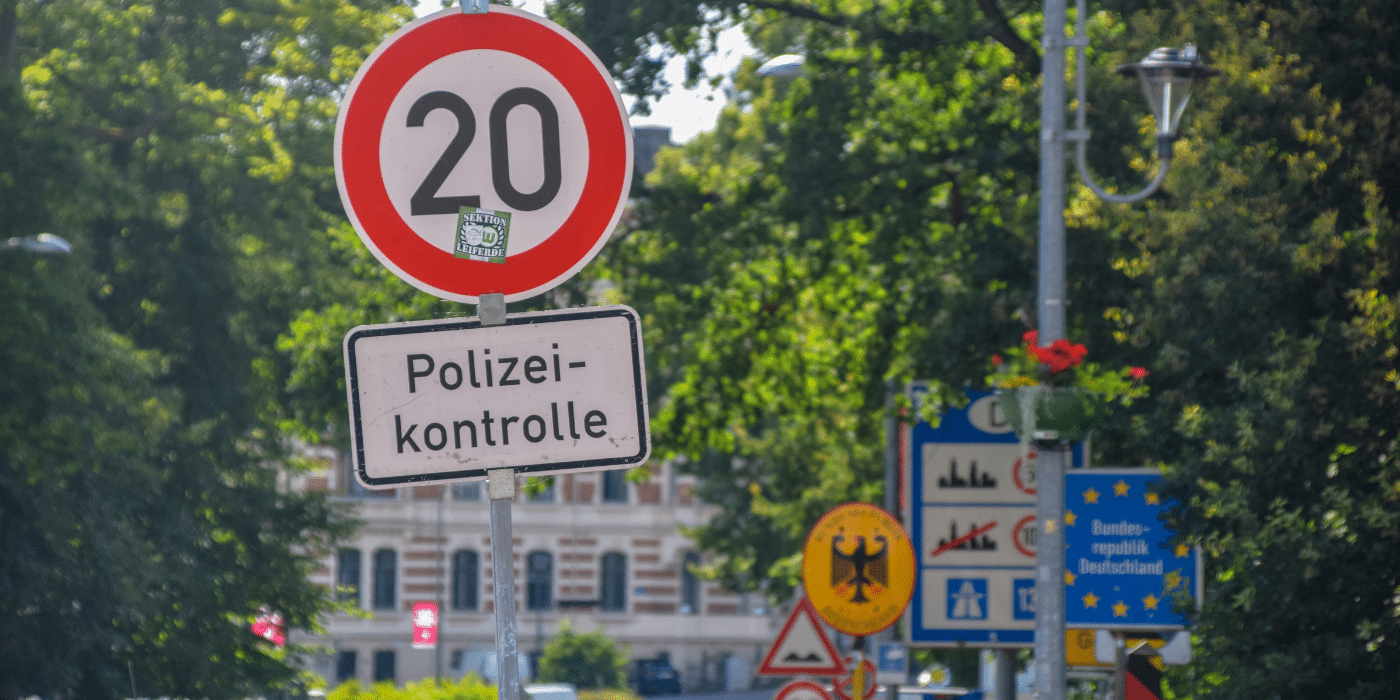

The Bavarian authorities have tried again - but this time they have not won in court. An identity check on a train at the German-Austrian border has now been declared unlawful by the Bavarian Administrative Court (BayVGH). And this has far-reaching consequences not only for the plaintiff, but for everyone who regularly travels through the Schengen area. What does this ruling mean? And why has it caused such a stir?
The case: One check too many
In June 2022, international law expert Stefan Salomon was stopped by the federal police during a train journey on the ICE near Passau. Salomon is known for his commitment to European law and refugee law - in other words, someone who is well versed in the legal foundations of European cooperation. What made him special, however, was his lawsuit against this border control. The Bavarian judiciary has now ruled: The measure was unlawful.
The verdict: A clear violation of the Schengen Agreement
In its decision, the Bavarian Administrative Court clarified that border controls at the German-Austrian border may not be carried out without further ado. The argument that these controls are necessary to avert dangers in the area of migration is not sufficient. According to the judges, there must be new, concrete facts that justify these controls. Simply repeating the same justifications is not enough. In this case, the court considered that there was no legal basis for the checks.
Schengen and the freedom to travel
The decision is particularly controversial because it directly conflicts with the principles of the Schengen Agreement. This agreement allows member states to keep their borders open as a matter of principle. Border controls can only be reintroduced if there is a serious and demonstrable reason. In this case, the BayVGH ruled that the Federal Government was unable to provide sufficient grounds to maintain border controls.
What does this mean in practice?
This ruling not only calls the current border controls into question, but could also have an impact on future measures. The judges have sent out a clear signal: If a country like Germany wants to introduce border controls within the Schengen area, it must make it clear that this is actually necessary. And it is not enough to keep citing the same threat as a reason. The facts must change.
The question now is: will this ruling have a long-term impact on the practice of border controls in Germany? It remains to be seen whether the German government will appeal and how the ECJ will react in a possible later ruling.
Border controls must not become a political tool
The BayVGH's decision is an important step towards a clearer and fairer application of the Schengen rules. Anyone who thinks that border controls are the solution to everything is mistaken. Our society does not function according to the principle of "get rid of the rules when it gets inconvenient". Border controls should not become a politically easy-to-sell panacea. The ruling is a wake-up call that European law and freedom of movement within the EU must not simply be undermined by ever more border controls.
Recht 24/7 was the only online law firm to receive the Focus Money “Highest Customer Satisfaction” seal for the fourth consecutive year Recht 24/7 2023, 2024, 2025, and 2026 . The online law firm Recht 24/7 founded in 2003 with the slogan “Law can be simple” and has since helped more than 100,000 satisfied clients with all legal matters. This is also evidenced by the “Very High Customer Trust” award from WirtschaftsWoche in October 2024.

In the areas of trademark applications and start-ups, the firm filed the most applications in Germany in 2022 and 2021:
https://dev-recht24-7.de/dpma-markenanmeldung-mit-deutschlands-nummer-eins/