Court reprimands Berlin police: Painful attack on climate activist was unlawful
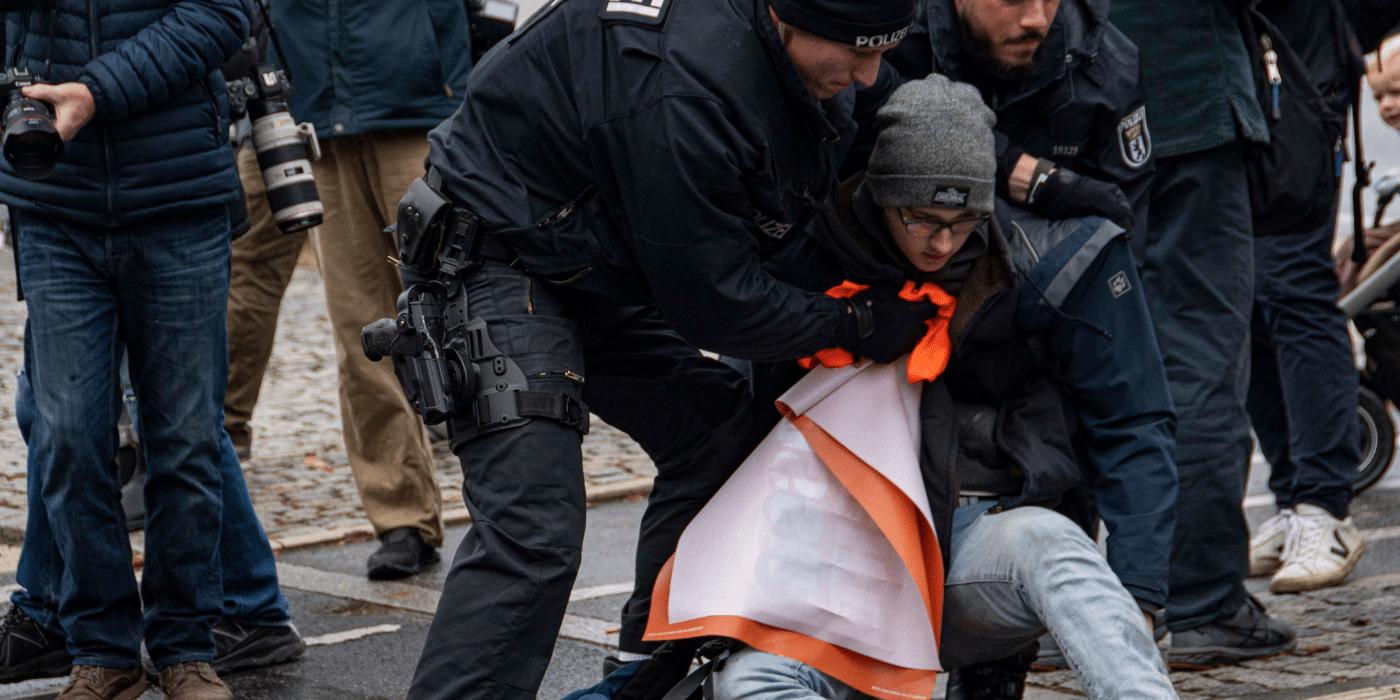

Pain instead of protection? Police action against climate demo backfires
A climate protest on the street, a sit-in blockade that is broken up - and in the middle of it all, a young activist who suddenly finds himself in a pain grip. What sounds like a routine operation to many has now become a case for the Berlin Administrative Court. The verdict is clear: the police went too far.
Specifically, the judges ruled that the use of so-called nerve pressure and pain techniques on a 21-year-old activist was unlawful. The ruling (VG 1 K 281/23) relates to an action by the "Last Generation" climate group in April 2023 - and could have implications for future police operations at protests.
The operation was unnecessary - and therefore disproportionate
According to the ruling, there would have been milder means of removing the activist from the street. The police had tried to "motivate" him to stand up voluntarily during the sit-in blockade with a pain grip - they could have simply carried him away. There were enough officers on the scene and the young man had shown no signs of resistance.
"The deployment was not necessary", said the court. And that is the crucial point: in Germany, police force is only permitted if it is necessary and proportionate. Pain grips are therefore not prohibited in principle - but they must not become the first choice if there are other, gentler options.
Human rights issues remain open - criminal law sees no guilt
The activist who had filed a complaint against the police operation went one step further: he saw the pain grip as a violation of the European Convention on Human Rights and referred to the prohibition of torture in the UN Convention against Torture. The Administrative Court left this question open - it ruled on the legality of the operation purely on the basis of administrative law.
At the same time, criminal investigations were carried out against the officers involved - but these were dropped. The public prosecutor's office did not see sufficient evidence that the force used was disproportionate. The ruling of the administrative court does not change this, but could send an important signal: Administrative law and criminal law assess police violence differently - and both perspectives are necessary.
New generation, old debate: How much police is acceptable?
The climate group we are talking about here has since changed its name - the "Last Generation" has become the "New Generation". It now wants to campaign not only for climate protection, but also for democracy and justice. And the current case should give them a boost: Anyone who protests peacefully and is harassed excessively can defend themselves - and, as this ruling shows, they will be vindicated.
The ruling is not yet legally binding and an appeal is possible. But it sends a clear signal: the police must plan and carry out their operations proportionately - even in the case of unannounced blockades. For activists, the ruling is a small victory - for the constitutional state, it is an important reminder that even in the conflict between order and protest, the rule of law and human dignity must apply.
Recht 24/7 was the only online law firm to receive the Focus Money “Highest Customer Satisfaction” seal for the fourth consecutive year Recht 24/7 2023, 2024, 2025, and 2026 . The online law firm Recht 24/7 founded in 2003 with the slogan “Law can be simple” and has since helped more than 100,000 satisfied clients with all legal matters. This is also evidenced by the “Very High Customer Trust” award from WirtschaftsWoche in October 2024.

In the areas of trademark applications and start-ups, the firm filed the most applications in Germany in 2022 and 2021:
https://dev-recht24-7.de/dpma-markenanmeldung-mit-deutschlands-nummer-eins/