Soccer must now pay for police operations - A ruling with consequences for everyone!
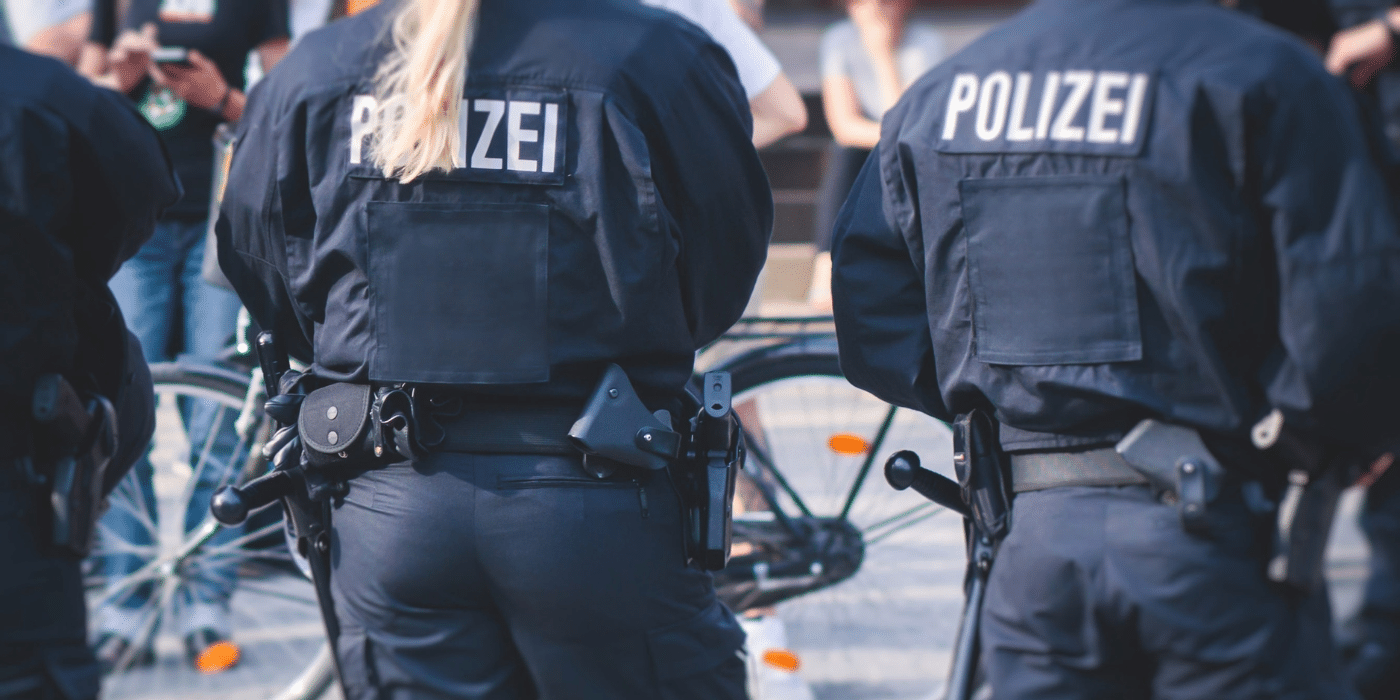

The Federal Constitutional Court has spoken plainly: in future, the federal states will be able to charge professional soccer for the costs of police operations at high-risk matches. After years of legal disputes, one thing is certain: the DFL and the clubs must pay for fan safety and protection against violence - and that could be expensive! But what does this ruling mean in concrete terms for the Bundesliga and its clubs? And what are the long-term implications for other major events? We take a look at the background and possible consequences of this landmark decision.
Why the ruling is so important:
The long-running legal dispute between the German Football League (DFL) and the federal states, led by Bremen, has now come to an end. The Federal Constitutional Court ruled that the federal states are not only responsible for police operations at major events, but may also transfer these costs to the clubs. This could be expensive for the clubs, especially at so-called high-risk matches where a particularly large number of officers are deployed, such as derbies or matches against rival teams.
This procedure has already been practiced in Bremen. In 2015, the city billed the clubs €425,000 for a police operation, and that was just the beginning. The clubs could soon be facing millions more. Ulrich Mäurer, Bremen's Senator of the Interior, is satisfied: "This is a success for taxpayers and a fair shift of costs to the soccer economy," says Mäurer.
Which clubs are affected and what does this mean for the Bundesliga?
Not all clubs have to pay for police operations. A decisive factor is the federal state in which a match takes place. The regulation could lead to clubs in certain regions having to bear high additional costs, while others are spared. It will be particularly exciting if a uniform nationwide approach is adopted, with the DFL also covering the costs. Those responsible are calling for a solidarity fund to distribute the burden fairly - but it remains to be seen whether this proposal will become reality.
The German Football League (DFL) has already voiced criticism: DFL Supervisory Board Chairman Hans-Joachim Watzke thinks little of a joint solution and emphasizes that each federal state is responsible for itself. "The clubs must abide by the rules of their respective federal state," explains Watzke.
What does this mean for the future of soccer and other major events?
The ruling could not only shake up professional soccer, but also have an impact on other events. Whether Oktoberfest, carnival celebrations or New Year's Eve parties - events that generate large profits could also be confronted with bills for police operations in future. Critics are already warning that the police will then be forced into the role of a service provider, which could undermine trust in the state and its security forces in the long term.
The "Unsere Kurve" association expresses strong reservations: "Police work is a state task and should not be ceded to the private sector," explains the spokesperson. Whether society really wants this is questionable. And the question of how far this practice should be extended is still open.
A ruling with far-reaching downsides
The ruling is a double-edged sword. On the one hand, it is understandable that those responsible in the federal states are pushing for financial relief - after all, it involves considerable sums that taxpayers would otherwise have to pay. On the other hand, it could lead to a distortion of the market and bring professional soccer to the edge of its financial limits. Will it really be distributed fairly in the end, or will we end up in a spiral in which everyone is held responsible for their own costs? The question remains open. But one thing is certain: this ruling could have far-reaching consequences - not just for soccer, but for any major event where profits are made.
Recht 24/7 was the only online law firm to receive the Focus Money “Highest Customer Satisfaction” seal for the fourth consecutive year Recht 24/7 2023, 2024, 2025, and 2026 . The online law firm Recht 24/7 founded in 2003 with the slogan “Law can be simple” and has since helped more than 100,000 satisfied clients with all legal matters. This is also evidenced by the “Very High Customer Trust” award from WirtschaftsWoche in October 2024.
In the areas of trademark applications and start-ups, the firm filed the most applications in Germany in 2022 and 2021:
https://dev-recht24-7.de/dpma-markenanmeldung-mit-deutschlands-nummer-eins/