The mysterious letters: Who is misusing my address?
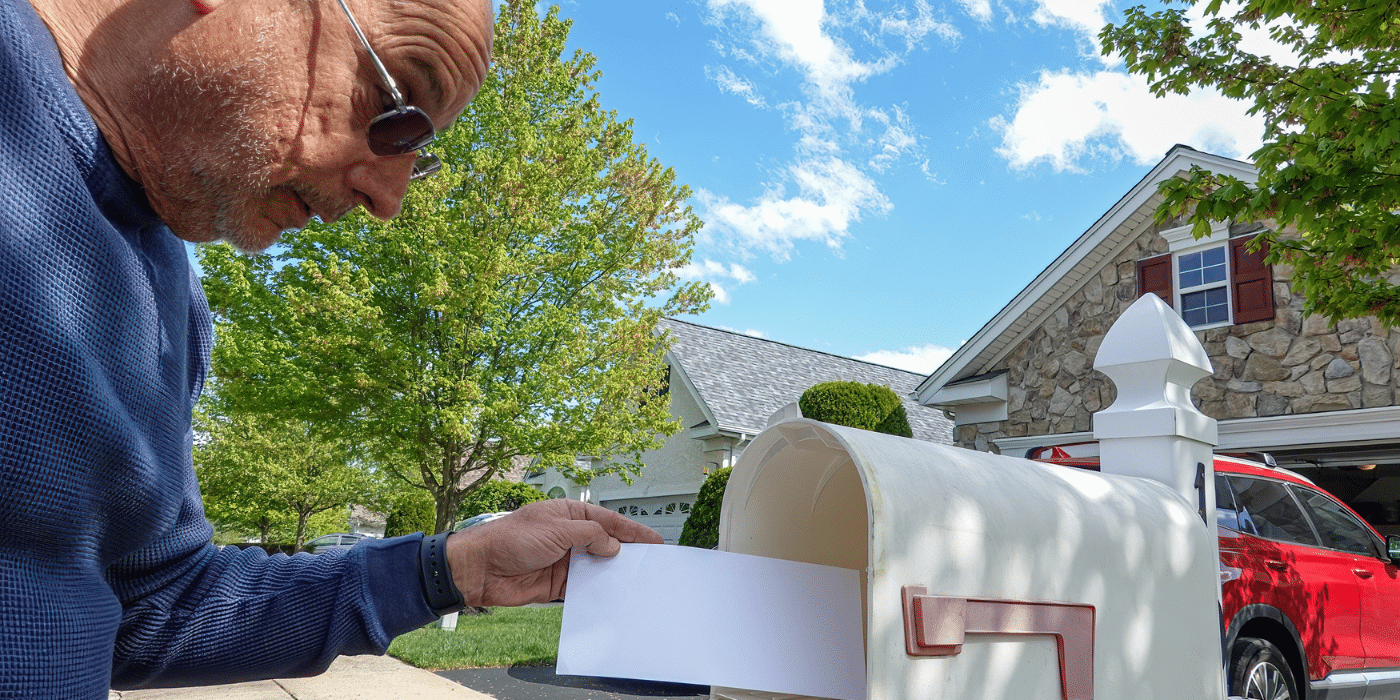

Hermann M. lives in Großhadern, a quiet suburb of Munich, in a terraced house that he has lived in with his wife for decades. But for some time now, he has been receiving letters that are not addressed to him, but to completely unknown people. What lies behind this could indicate a large-scale fraud.
How a quiet neighborhood became a hotspot for letterbox companies
In October 2022, Hermann M. received the first letter - but not for him. Instead, it was addressed to a "Mirela M.", whose name was completely foreign to him. But that was just the beginning: other letters for people with names mainly from south-eastern Europe landed in his letterbox. They were about all sorts of things - from opening a savings bank account to insurance inquiries. All the letters had one thing in common: the names were unknown to him.
Why did these letters come to him? Hermann M. quickly discovered that the people named on these documents were supposedly registered at his address. But how could that be? He, who has lived at this address since 1977 and is the sole owner of the house, had never invited any of these people to visit him.
A fraud system that runs via his address?
The situation escalated when he noticed that more and more letters and reminders were arriving for these "flatmates". Dunning letters from debt collection agencies, documents from the German Pension Insurance and even mail from the Federal Central Tax Office. Hermann M. suspected that a criminal scam was at work here. The suspicion: fraudsters could be using his address to make fraudulent registrations in order to obtain services or financial benefits.
The suspicion was confirmed when Hermann M. learned that some of these people had apparently even been visited by the police. One Josip P., who according to the documents was registered at his address, was the target of a police investigation in April 2023.
Targeting the authorities: who is responsible?
Hermann M. reported the case to the police and the public prosecutor's office - but the proceedings were quickly dropped. The relevant authorities stated that the people concerned had indeed registered in person, but the "Wohnungsgeberbescheinigung" (landlord's certificate), which serves as proof of moving in, was apparently forged. Hermann M. asserted that he had never issued such a certificate. However, the authorities had no indication that anything unusual had occurred, as the registration data did not contain any detailed information about the type of house.
However, the district administration department (KVR) has now announced that it will investigate the matter further. It will be particularly interesting as the KVR is currently the focus of a corruption scandal in which several employees are accused of having illegally issued permits in exchange for money and benefits in kind.
What's really going on here?
The question remains: Why do fraudsters use the addresses of uninvolved third parties like Hermann M. for their schemes? One obvious suspicion is that the perpetrators deliberately seek out addresses in quiet residential areas such as Großhadern in order to disguise their illegal activities. But the authorities also have to ask themselves how something like this could go unnoticed and why the investigations have so far come to nothing.
Who protects us from identity fraud and failure by the authorities?
It is time for those responsible at the authorities to change course and stop dismissing such incidents as isolated cases. The case of Hermann M. shows how susceptible the system is to abuse - and not just in Großhadern. Who will protect honest citizens from the consequences of such identity fraud? Should it really be up to homeowners to protect themselves from criminal activities? If the authorities continue to react so laxly, the question remains as to how many more people will unwittingly fall into similar traps.
Recht 24/7 was the only online law firm to receive the Focus Money “Highest Customer Satisfaction” seal for the fourth consecutive year Recht 24/7 2023, 2024, 2025, and 2026 . The online law firm Recht 24/7 founded in 2003 with the slogan “Law can be simple” and has since helped more than 100,000 satisfied clients with all legal matters. This is also evidenced by the “Very High Customer Trust” award from WirtschaftsWoche in October 2024.
In the areas of trademark applications and start-ups, the firm filed the most applications in Germany in 2022 and 2021:
https://dev-recht24-7.de/dpma-markenanmeldung-mit-deutschlands-nummer-eins/