Over and out! Why 200,000 companies in Germany are suddenly closing down - and what this means for us all
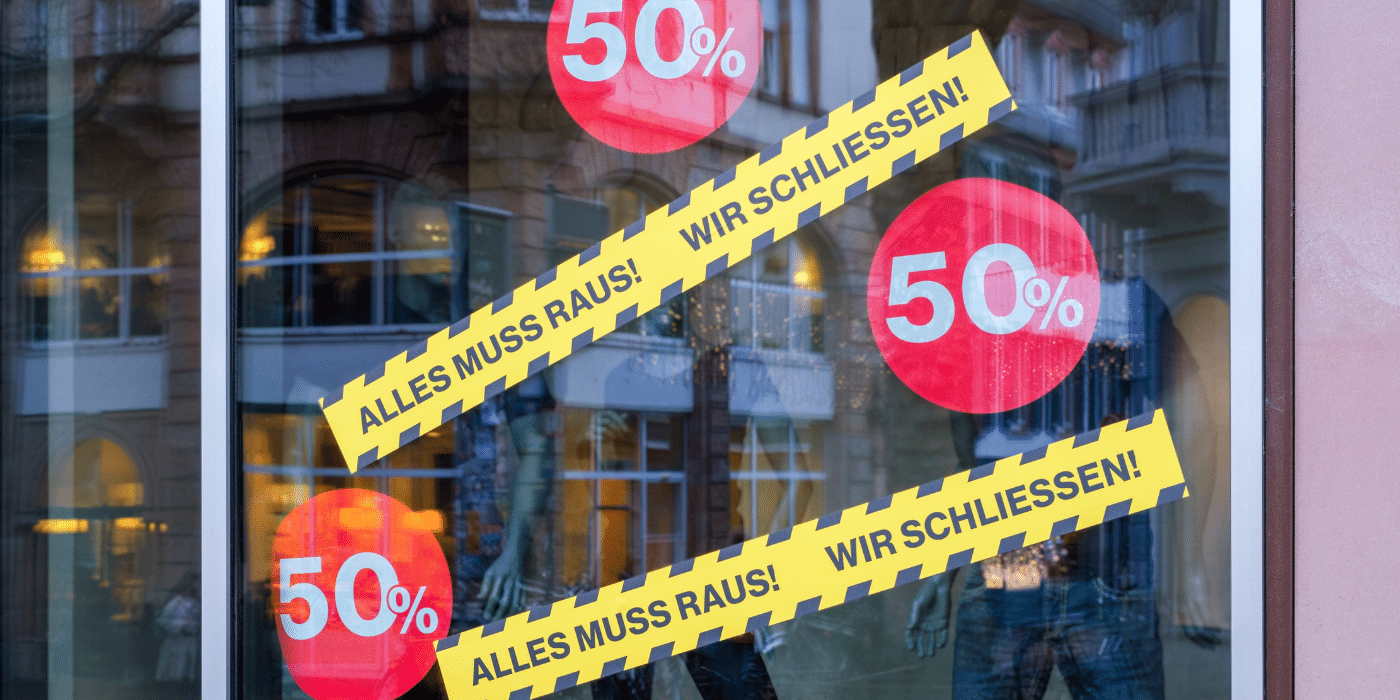

Economy in dire straits: almost 200,000 companies went out of business in 2024
A sad record: last year, 196,100 companies in Germany closed their doors for good - a record high not seen since the financial crisis in 2011. That's a whopping 16% more than in 2023. And it's not just small hairdressing salons or bakeries that are being hit, but increasingly also medium-sized industrial companies and future-oriented sectors such as IT, environmental technology and diagnostics.
Patrik-Ludwig Hantzsch from Creditreform puts it in a nutshell: "The closure figures are alarming in all sectors of the economy." And he is right: when even sectors with golden prospects for the future suddenly run out of steam, something is seriously wrong.
Industries of the future without a future?
The figures are sobering. Around 13,800 companies in the fields of IT, environmental technology, product development and diagnostics went out of business in 2024 - an increase of around 25 percent compared to the previous year. It is precisely in these areas, which stand for digitalization, sustainability and innovation, that the lights are going out.
Why? Sandra Gottschalk from ZEW names one central reason: a shortage of skilled workers. This means that not enough orders can be accepted to work economically. If you can't find people, you can't do any work - it's as simple as that. Added to this are high energy costs, increasing competitive pressure from suppliers from abroad and an investment backlog.
But industry has also been hit hard: over 1,000 energy-intensive companies closed in 2024, 26% more than in the previous year. The situation is particularly grim in the pharmaceutical and chemical industries as well as in the healthcare sector - which could lead to a further deterioration in medical care across the country. Fewer pharmacies, fewer doctors' surgeries - people will notice this in their everyday lives.
Increasingly affected: The middle class - the backbone is breaking
In the past, it mainly affected small, owner-managed businesses - today, larger companies are also increasingly affected. This is more than just a warning signal, it is an economic emergency call.
Many entrepreneurs cannot find a successor or give up in frustration because it is no longer worth the effort. Others relocate their production abroad completely. Or they simply stop investing because they no longer see a future in Germany.
Gottschalk describes another problem: young people today tend to be drawn to permanent jobs with a regular income - self-employment is losing its appeal. The result: knowledge is lost, expertise migrates and the economy loses substance.
The economic basis is eroding
It's bizarre: everyone is talking about innovation, start-ups and the future - and at the same time these very companies are dying like flies. And the state looks on as if this will fix itself. Spoiler: It doesn't.
Instead of producing small-scale subsidy programs and mountains of bureaucracy, we finally need real economic courage: fewer taxes, fewer hurdles, more recognition for entrepreneurs. And please don't wait until the last medium-sized company switches off the light. Because without them - no jobs, no innovation, no prosperity.
Germany must once again become a place where reasons are not the beginning of the end.
Recht 24/7 was the only online law firm to receive the Focus Money “Highest Customer Satisfaction” seal for the fourth consecutive year Recht 24/7 2023, 2024, 2025, and 2026 . The online law firm Recht 24/7 founded in 2003 with the slogan “Law can be simple” and has since helped more than 100,000 satisfied clients with all legal matters. This is also evidenced by the “Very High Customer Trust” award from WirtschaftsWoche in October 2024.
In the areas of trademark applications and start-ups, the firm filed the most applications in Germany in 2022 and 2021:
https://dev-recht24-7.de/dpma-markenanmeldung-mit-deutschlands-nummer-eins/
Do you need legal advice for your company? Get expert support now and avoid unnecessary risks!