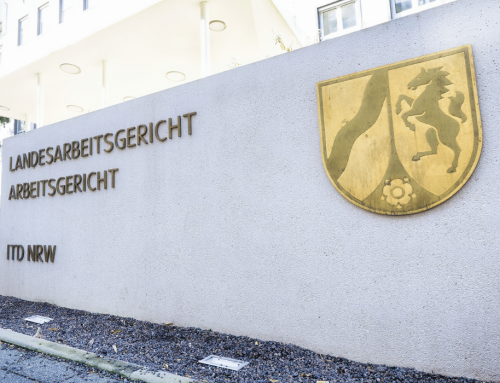
ARD, ZDF & Co. criticized: Does every broadcasting contribution now have to go to court?


Image: AlexBuess / shutterstock.com
"Compulsory fee" without diversity? One woman says: No thanks!
What happens if you refuse to pay the license fee because you think ARD and ZDF are too one-sided? This is exactly what a woman from Bavaria did - with a justification that has now triggered a real landmark ruling: Public service broadcasting (ÖRR) is failing to fulfill its mandate because it offers too little diversity of opinion. And thus, so the argument goes, the broadcasting fee is unconstitutional.
The case has already been heard in several instances and finally ended up at the Federal Administrative Court in Leipzig. And the ruling (BVerwG 6 C 5.24) is quite something: if the allegation turns out to be true, the broadcasting fee could indeed be deemed unconstitutional. Sounds crazy? But it is now legally conceivable.
Explosive verdict: the contribution is on the brink - but only in extreme cases
Specifically, the court says: only if ARD, ZDF & Co. "grossly" violate the principle of balance and diversity of opinion over a longer period of time may the contribution be considered unconstitutional. And this is where it gets exciting: Suddenly it is possible for citizens to refuse to pay their GEZ fees - if they have good evidence.
However, the court immediately dampened expectations. It seemed extremely doubtful whether the plaintiff would be able to obtain a referral to the Federal Constitutional Court. So not every joke in a cabaret or every slanted news program is a breach of the constitution. The bar is high - very high.
Because if you want to sue the ÖRR, you have to deliver properly: years of program monitoring, scientific reports, analyses. Simply shouting at the TV and then stopping payment - that won't be enough.
How much opinion is allowed?
The ruling strikes a chord with the times. Because many people have the feeling that the same faces and opinions always appear in talk shows, documentaries and news. And if the impression is created that diversity is more of a simulation than a reality, then a compulsory contribution quickly becomes a provocation.
But the Federal Administrative Court has also made it clear: It is not about individual cases or personal sensitivities. It is about the overall program over a longer period of time. If there is a systematic lack of critical opinions, then - and only then - is the contribution open to criticism.
Until now, the rule was: if you have a receiver, you have to pay.
It was clearly regulated for decades: If you have a receiver, you have to pay. Now something is finally moving! The fact that a court of all people has ruled that the contribution is no longer legal if the program is too one-sided is a legal bombshell. But let's be honest: why do we have to explain this at all? Diversity of opinion should not be an academic debate, but a matter of course. Instead of expert opinions, a look at the evening program and common sense should suffice. Perhaps public broadcasting needs to "explain" less and finally listen more again.
Recht 24/7 was the only online law firm to receive the Focus Money “Highest Customer Satisfaction” seal for the fourth consecutive year Recht 24/7 2023, 2024, 2025, and 2026 . The online law firm Recht 24/7 founded in 2003 with the slogan “Law can be simple” and has since helped more than 100,000 satisfied clients with all legal matters. This is also evidenced by the “Very High Customer Trust” award from WirtschaftsWoche in October 2024.
In the areas of trademark applications and start-ups, the firm filed the most applications in Germany in 2022 and 2021:
https://dev-recht24-7.de/dpma-markenanmeldung-mit-deutschlands-nummer-eins/
Do you have doubts about the broadcasting fee? Book a consultation now to check your legal options!