Abitur 2025 in Bavaria: What the end means for the Abitur class
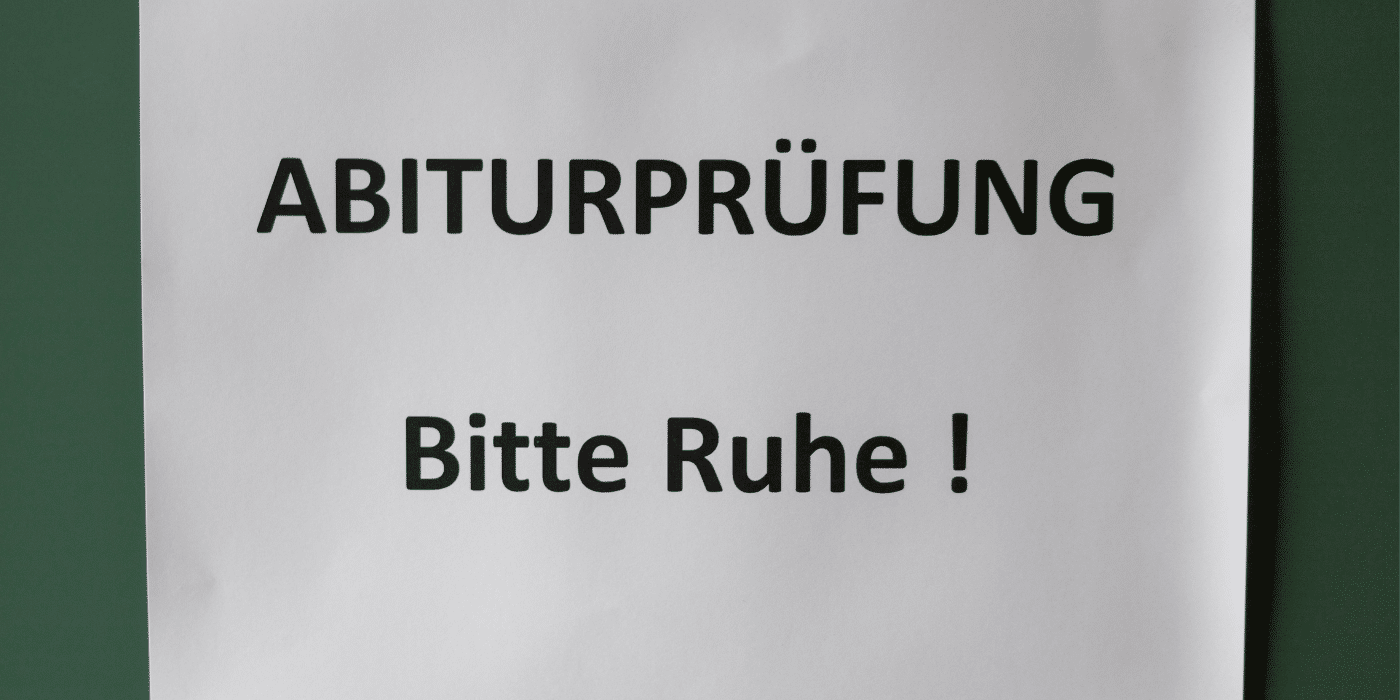

Bavaria has been hit with a surprising twist: The Abitur 2025 will largely be canceled for many high school graduates. The return to the nine-year Gymnasium (G9) will mean that many exams will no longer be held. What does this mean for the future of young people and the state's economy? We take a look at the impact on universities and the job market and explain why the world is not coming to an end.
A small Abitur cohort - what does this mean for universities?
While Bavarian pupils traditionally stormed the universities with around 33,000 school leavers per year, only around 5,000 are expected to do so in 2025. This is a drastic decline, but what impact will this have on universities?
The Technical University of Munich (TUM) remains relaxed. The reason? Only around 40% of students start their studies directly after graduating from high school. The rest have either decided to spend some time abroad, have completed another course or have waited a few years. The short-term decline will therefore have little impact on enrolments.
The unstoppable international mix of students
Another point that puts the situation into perspective: The proportion of international students in Bavaria is high, and many young people who complete their Abitur in other countries return for their studies. This means that the number of students will not fall significantly even without a large Abitur cohort.
In addition, students from other federal states remain an important factor. They use the higher education system in Bavaria, regardless of how many school leavers there are this year. This leads to a relatively stable enrolment situation at universities and universities of applied sciences.
Economy on uncertain ground: lack of trainees due to lack of high school graduates
However, the effects on the labor market are clearly noticeable. At a time when more and more young people are choosing the direct route to university, fewer high school graduates will be available for dual training. Nevertheless, the Bavarian economy will probably be able to cushion the impact of this dip. Traditional school-leaving qualifications such as the Mittlere Reife and the Realschulabschluss will remain stable and will continue to secure training places in many areas. The proportion of trainees from these types of school remains high, particularly in skilled trades and technical professions.
Nevertheless, it is also a sign that the training and study system is not as rigid as it often seems. There are more and more paths to professional success, and not everyone necessarily has to do an Abitur to be successful.
More options, less pressure
What does this mean for the future? For young people who do not take the Abitur in 2025, there are still many paths to a professional future. The absence of a year group will leave a gap, but the structure of the Bavarian educational landscape will remain robust. Universities and the economy will not feel any catastrophic effects this year. Rather, it is a sign that we need to stop fixating too much on the Abitur as the only path to success.
Recht 24/7 was the only online law firm to receive the Focus Money “Highest Customer Satisfaction” seal for the fourth consecutive year Recht 24/7 2023, 2024, 2025, and 2026 . The online law firm Recht 24/7 founded in 2003 with the slogan “Law can be simple” and has since helped more than 100,000 satisfied clients with all legal matters. This is also evidenced by the “Very High Customer Trust” award from WirtschaftsWoche in October 2024.
In the areas of trademark applications and start-ups, the firm filed the most applications in Germany in 2022 and 2021:
https://dev-recht24-7.de/dpma-markenanmeldung-mit-deutschlands-nummer-eins/